
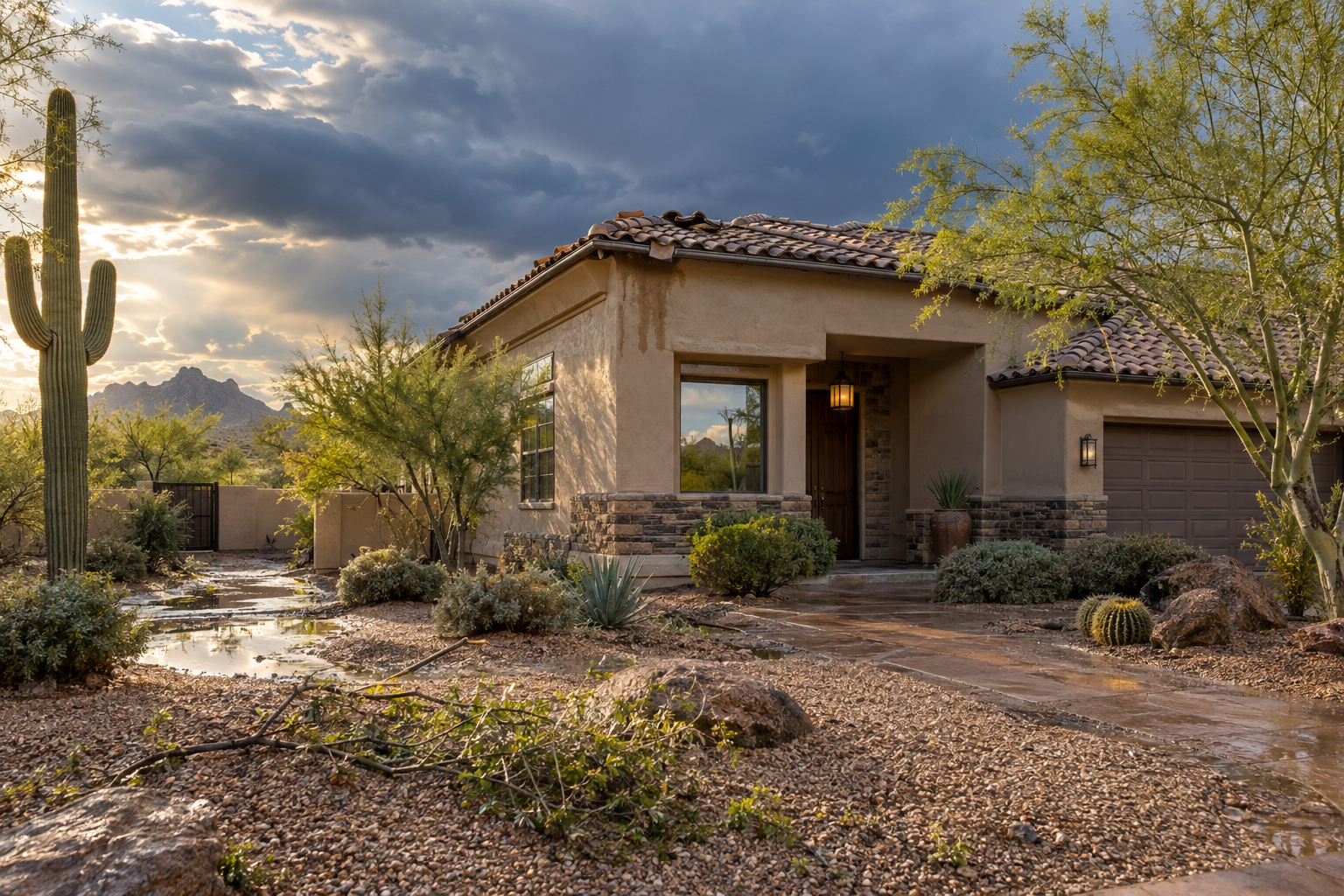
Arizona’s monsoon storms can arrive quickly and leave just as fast. Once the clouds clear, everything may appear normal from the street. However, Arizona monsoon home damage is not always immediately visible—especially when a seasonal or vacation home remains unoccupied.
Strong winds can shift roof tiles, rainwater can enter through small openings, and drainage problems may allow water to collect near the home. A minor issue that would normally be noticed right away can remain hidden for days or weeks when no one is checking the property.
A careful post-monsoon inspection can help identify these warning signs before they develop into larger and more expensive problems.
Common Signs of Arizona Monsoon Home Damage
Not every monsoon causes obvious destruction. In many cases, the damage is subtle.
A roof tile may move without falling to the ground. Water may leave a faint stain inside a closet or along a ceiling. A tree branch may press against the roof without being visible from the driveway. An exterior gate may still be standing but have loosened hinges or hardware.
These problems are particularly concerning for absentee homeowners because there may be no one present to notice a new odor, dripping sound, warm interior, tripped breaker, or water stain.
The National Weather Service reports that Arizona thunderstorms frequently produce strong winds, blowing dust, flash flooding, and rapidly changing conditions. Some monsoon outflows produce damaging wind gusts strong enough to affect roofs, trees, power lines, and exterior property features.
1. Roof Tiles and Roof Penetrations
Tile roofs are common throughout Anthem, Cave Creek, Carefree, North Scottsdale, and the surrounding North Valley. Although the tiles provide protection and complement the desert architecture, strong winds can crack, lift, or displace them.
After a significant storm, the roof should be visually checked from the ground for:
- Missing, cracked, or shifted tiles
- Exposed underlayment
- Debris collected in roof valleys
- Damage around vents, flashing, or other penetrations
- Tree branches contacting the roof
- Changes along ridgelines and roof edges
A ground-level inspection cannot identify every roof defect, but it can reveal conditions that warrant evaluation by a qualified roofing professional.
2. Interior Signs of Water Intrusion
Rainwater does not always produce an immediate ceiling leak. It can travel behind roofing materials, through an attic, or along framing before becoming visible inside the home.
Interior warning signs may include:
- New ceiling or wall stains
- Bubbling or peeling paint
- Swollen baseboards
- Damp carpet or flooring
- Musty or unusual odors
- Moisture near windows and exterior doors
- Discoloration inside cabinets or closets
These signs should be addressed promptly. According to the U.S. Environmental Protection Agency, wet or damp materials should generally be dried within 24 to 48 hours to reduce the likelihood of mold growth.
In an occupied home, someone may notice a leak while it is happening. In a vacant home, the first indication may not appear until significant damage has already occurred.
3. Drainage and Standing Water
Arizona’s hard, dry soil does not always absorb heavy rain quickly. Water may flow across gravel landscaping, collect near the foundation, or enter low areas around patios and side yards.
After a storm, check for:
- Standing water near the home
- New erosion channels
- Washed-out gravel or decorative rock
- Soil pulling away from the foundation
- Blocked yard drains
- Debris around drainage openings
- Water collecting near exterior doors
- Damaged or displaced downspout extensions
The EPA recommends maintaining drainage so the ground slopes away from the building and water does not collect near the foundation. Even when standing water eventually disappears, stains, sediment, and displaced landscaping can help show where it traveled.
4. Trees, Landscaping, and Irrigation
High winds can break branches, loosen trees, and scatter debris across the property. Some damage may not become apparent until a weakened branch falls later.
Check trees and landscaping for:
- Broken or hanging limbs
- Trees leaning more than before
- Branches resting on the roof or walls
- Damaged irrigation lines or emitters
- Uprooted plants
- Landscape debris blocking drainage
- Fallen cactus sections or unstable desert plants
Irrigation systems should also be checked after heavy rain or wind. A damaged line can continue leaking long after the storm has passed, increasing water usage and saturating the surrounding soil.
5. Gates, Fences, and Exterior Fixtures
RV gates, pedestrian gates, fencing, light fixtures, and patio features can take considerable wind pressure during a monsoon.
A post-storm check should include:
- Loose hinges, latches, or gate hardware
- Gates that no longer close or align correctly
- Damaged fence panels
- Loose exterior lights
- Displaced patio furniture
- Damaged screens or window coverings
- Debris near pool equipment or HVAC units
- Signs of impact to stucco, windows, or doors
A gate may look secure while open but fail to latch properly when closed. That can create both a security concern and the potential for additional damage during the next storm.
6. HVAC, Electrical, and Pool Equipment
Monsoon storms may also affect the systems that keep an Arizona home protected while it is vacant.
Power interruptions can reset thermostats, clocks, pool controllers, security systems, and internet-connected devices. Dust and debris may collect around exterior HVAC or pool equipment, while electrical surges can cause breakers or GFCI outlets to trip.
Following a storm, homeowners should confirm that:
- The air conditioning system is operating
- Interior temperatures remain within the approved range
- Thermostats and smart-home devices are connected
- Breakers and GFCI outlets have not tripped
- Pool equipment appears to be operating normally
- Security cameras, alarms, and exterior lights are functioning
In Arizona, an unnoticed HVAC shutdown can quickly become a serious concern for an unoccupied home.
How Home Watch Helps After a Monsoon
Regular Home Watch visits can help identify Arizona monsoon home damage before a minor condition becomes a larger problem. At SitRep Home Watch & Preservation, each visit follows a property-specific checklist and includes documented observations and on-site photos.
When storm-related concerns are discovered, the homeowner receives a clear Situation Report with recommended action items. SitRep can also assist with vendor access, repair coordination, and follow-up visits when requested.
Home Watch is not a substitute for a licensed roofer, electrician, HVAC contractor, or other specialist. It provides something equally important: a reliable set of eyes on the property to identify visible concerns and help get the appropriate professional involved.
Protect Your Arizona Home While You Are Away
Arizona monsoon home damage does not need to be dramatic to become expensive. A shifted roof tile, blocked drain, failed air conditioner, or small area of moisture can become a much larger problem when it remains unnoticed.
If your home is vacant, seasonal, or frequently unattended, regular Home Watch visits can provide valuable oversight before and after Arizona storms.
SitRep Home Watch & Preservation serves Anthem, New River, Desert Hills, Cave Creek, Carefree, North Scottsdale, and surrounding North Valley communities.
Your Home. Our Mission.
Book a complimentary phone consultation to learn how SitRep can help protect your Arizona home while you are away.